SEO STRATEGY
Using our SEO Playbook to build organic traffic.
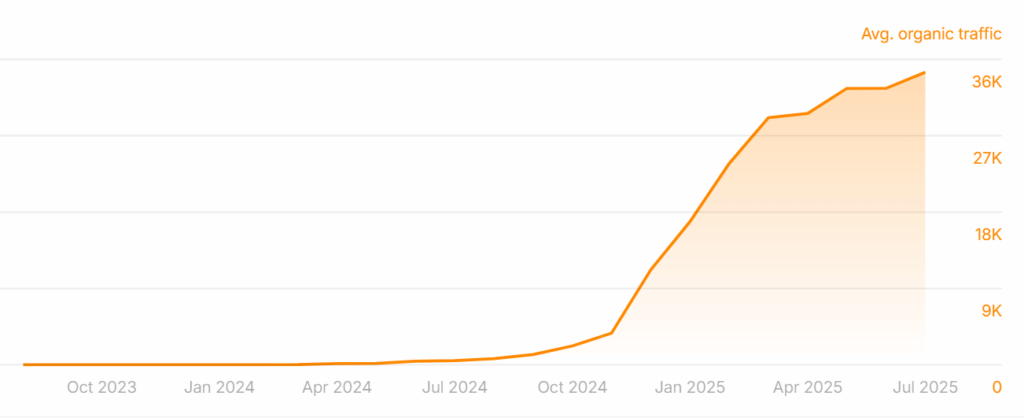
In this case study we’ll be sharing exactly how we increased Yard Sign Plus from nearly 0 organic search visitors per month to over 30,000.
We’ve used these same techniques on 100’s of other eCommerce stores to achieve very similar results. And by the end of this case study, you’ll be well equipped to implement the same SEO techniques on your eCommerce store.
Here’s the high-level overview of the SEO process we used for Yardsignplus.com.
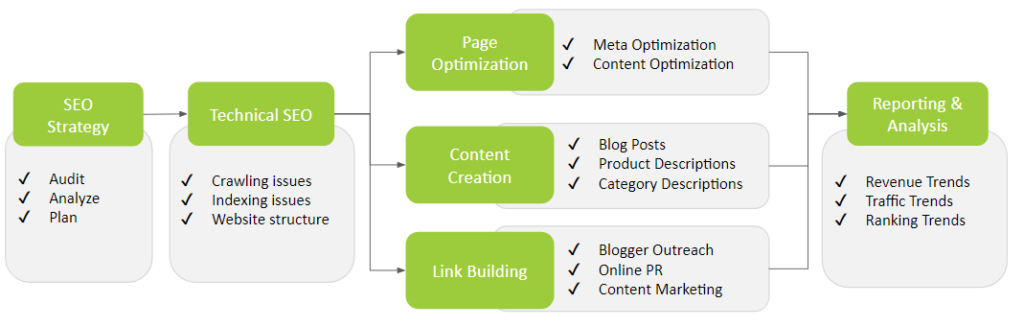
We’ll be diving into each of these stages in more detail below.
About Yard Sign Plus
Yard Sign Plus provides custom yard signs in a wide variety of shapes and sizes for several audiences.
- Domain: https://www.yardsignplus.com/
- Platform: Custom-coded domain
SEO Strategy
The client’s main goal was to increase organic search revenue. Our first step was to analyze the website, their target keywords, and competition to build the custom SEO strategy.
During our initial analysis, we identified a few key issues and opportunities:
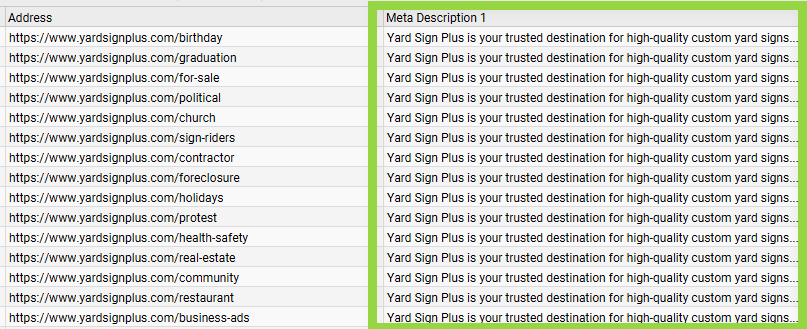
Issue #1 – Page Optimization: Most pages had poor title tags, and even duplicate meta descriptions.
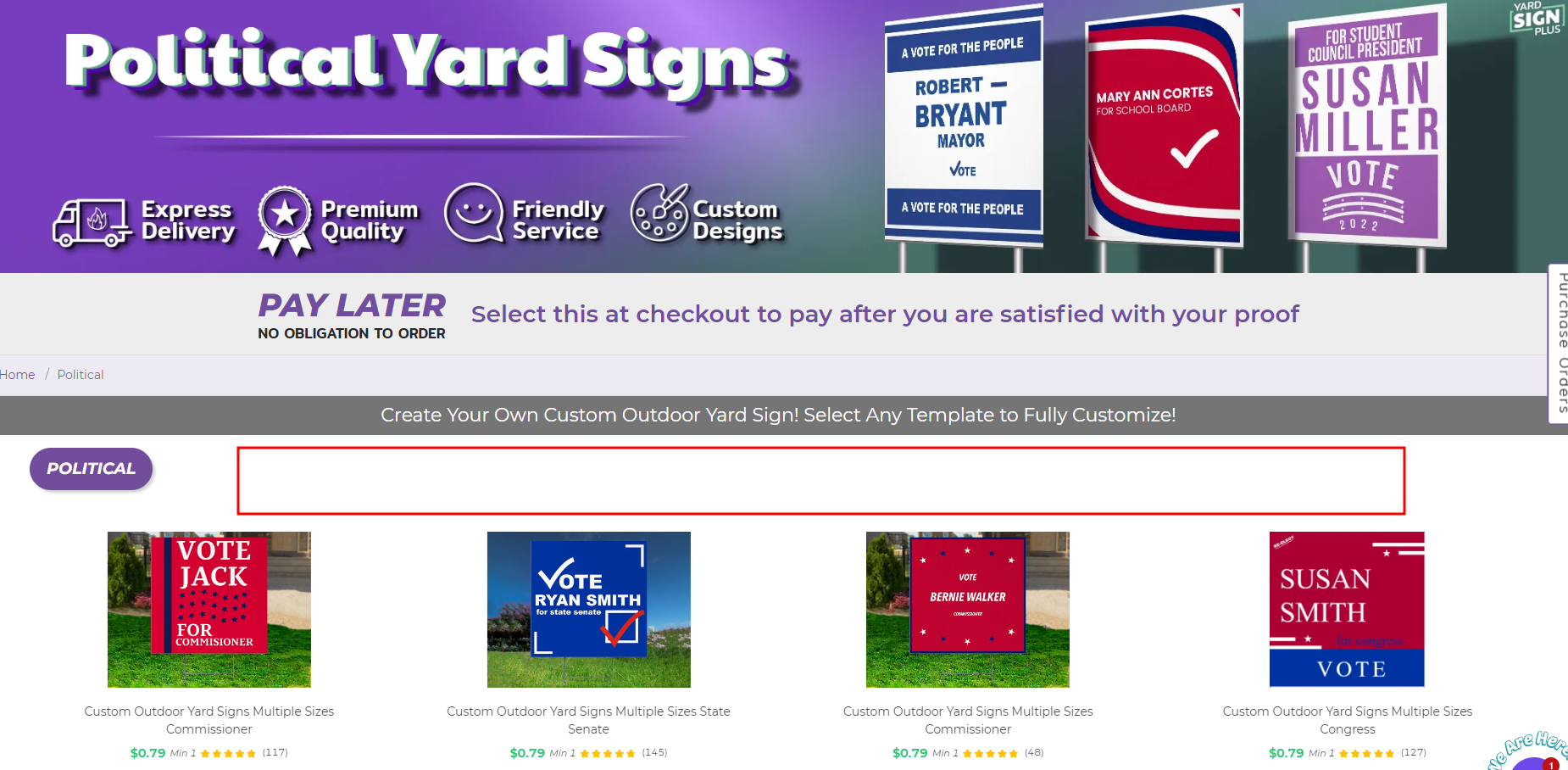
Issue #2 – Content: The content was not properly optimized for their target keywords, and there were many important category pages that didn’t have any content at all.
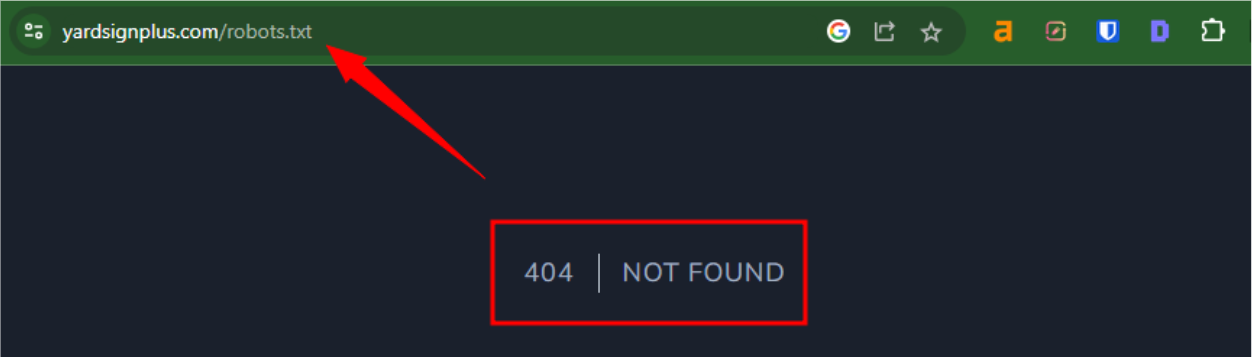
Issue #3 – Technical SEO: There were several critical technical issues negatively impacting the crawling, indexing, and ranking of the website (missing robots.txt, junk URLs indexed, keyword cannibalization, poor internal linking, etc.).
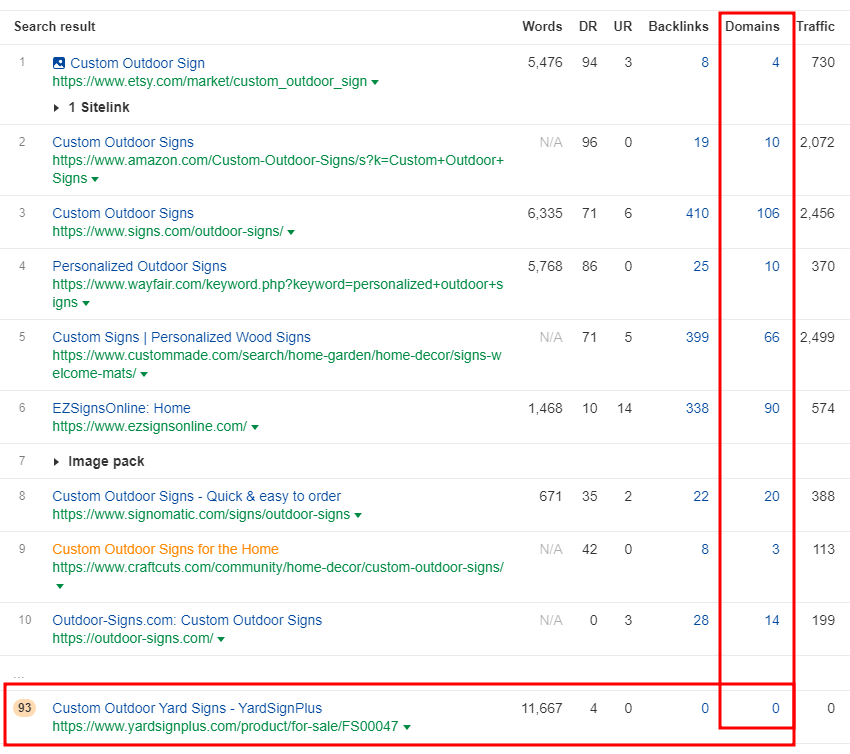
Issue #4 – Link Building: The yardsignplus.com domain only had a Domain Rating of 4, whereas most of their direct competitors had Domain Ratings between 20 and 50. We knew we had to build lots of backlinks and increase Domain Rating to have any chance at surpassing the competition.
Based on initial SEO review, we created the following custom SEO strategy:
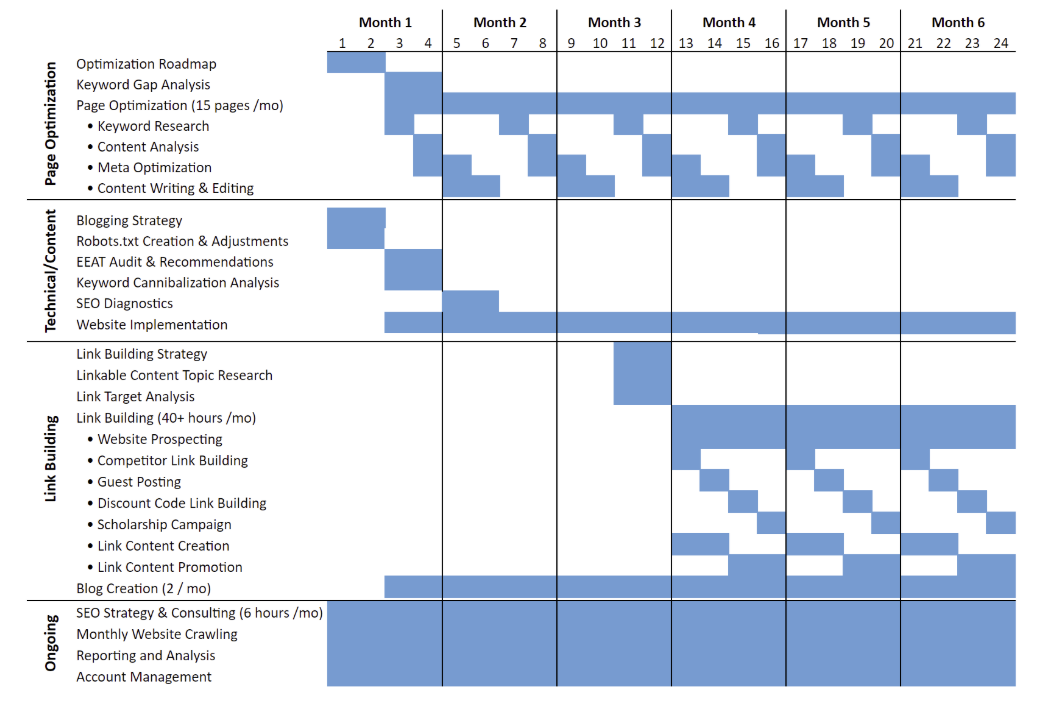
The Plan:
- Fix technical SEO issues as fast as possible.
- Optimize all important pages.
- Eliminate any Keyword Cannibalization issues
- Build high-quality, relevant backlinks.
- Improve Topical Authority by creating highly relevant content.
Let’s dive into each of these stages in more detail.
Technical SEO
The first step of the SEO Strategy was to fix any technical issues. Here are the main initiatives we focused on:
- Keyword Cannibalization Analysis
- Robots.txt Improvements
- SEO Diagnostics
Keyword Cannibalization Analysis
Keyword Cannibalization is an SEO issue that occurs when multiple pages compete for the same keyword. When a search engine has trouble determining which page to rank for a specific search keyword, oftentimes none of the pages rank as well as they could.
Here’s a clear example of what keyword cannibalization looks like.
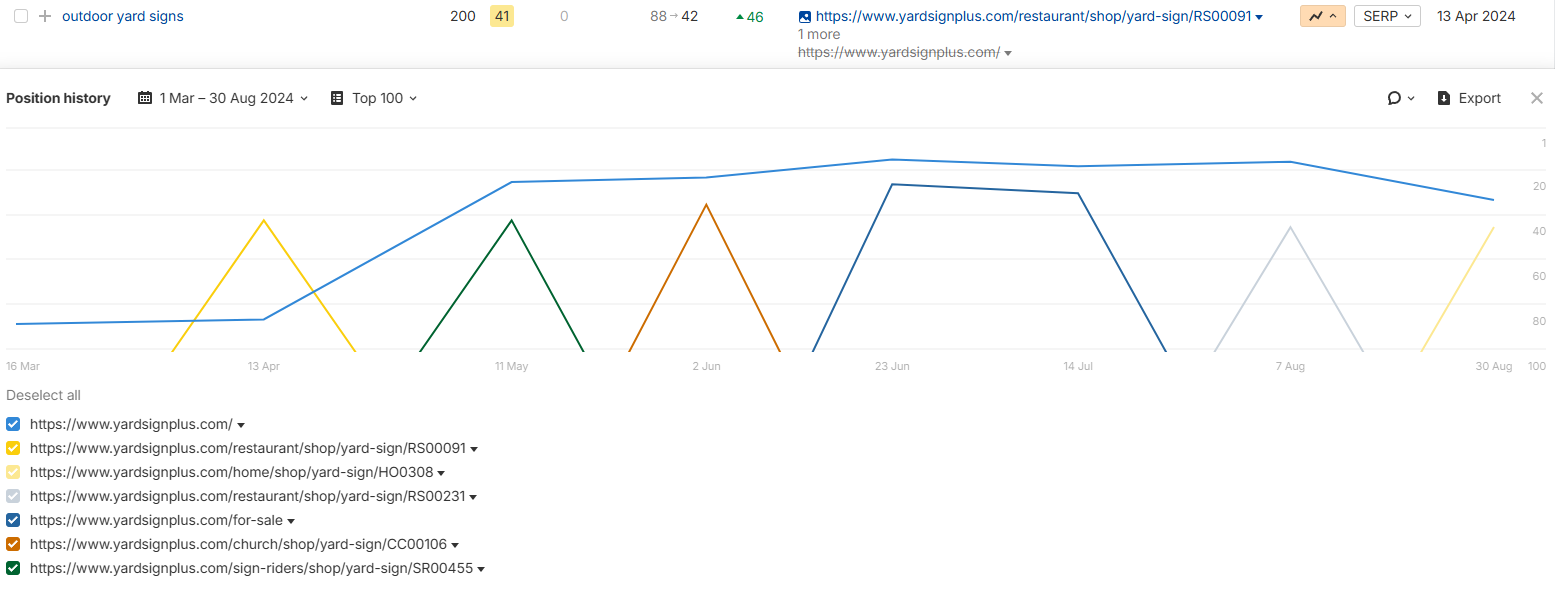
Notice how Google keeps jumping from page to page, trying to figure out the best page to rank for “outdoor yard signs”?
Using our proprietary Keyword Cannibalization Tool, we were able to quickly identify keywords where a significant portion of impressions were shared across multiple pages, a clear sign of keyword cannibalization.
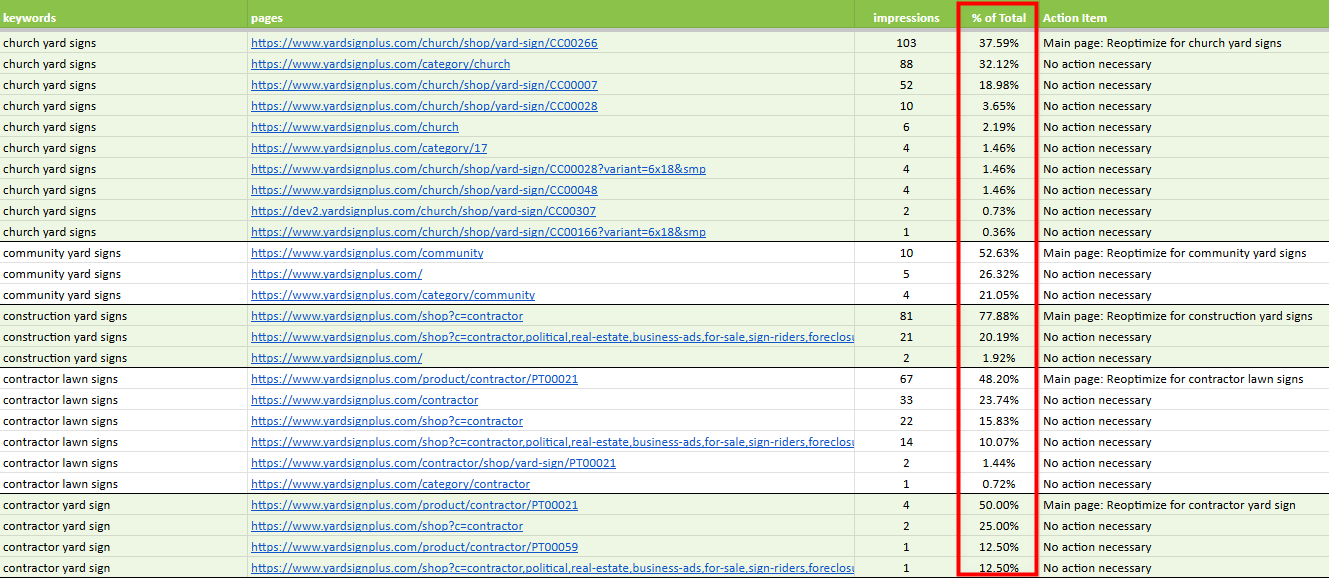
The next step was to help search engines understand the best page to rank for each keyword. This was done by re-optimizing the ranking pages and adding internal links from the incorrect pages to the correct pages, all while using exact-match anchor text.
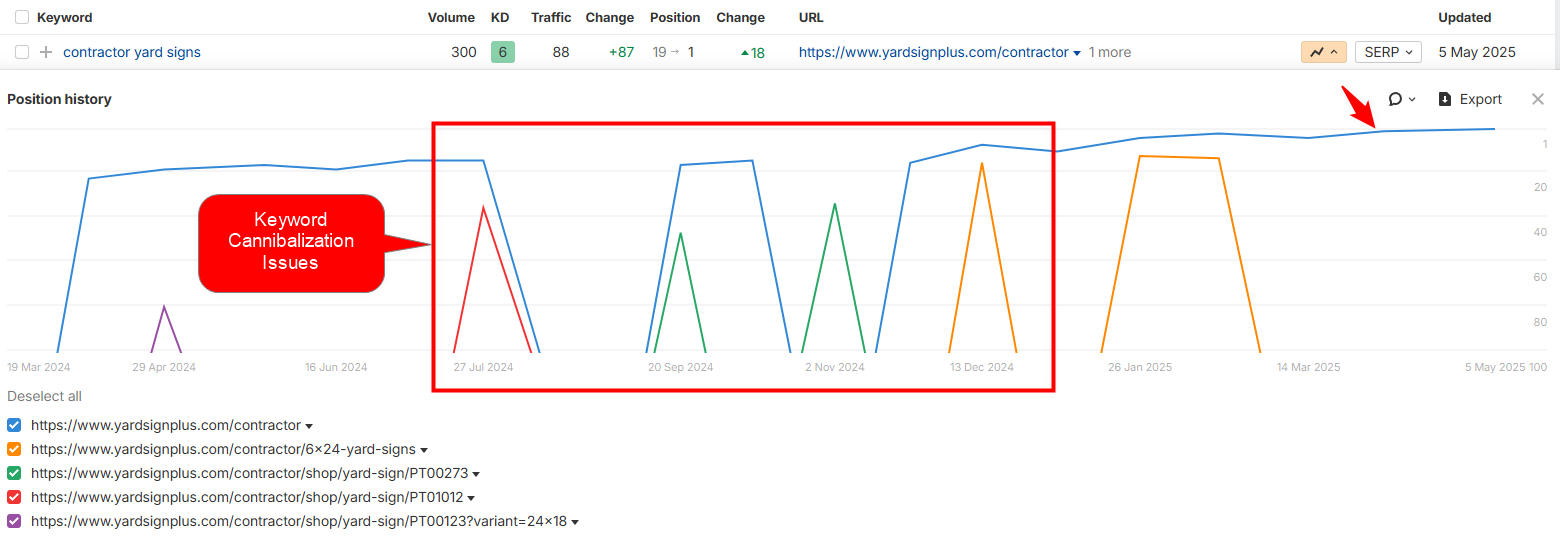
Once it became clear to search engines which page to rank for each keyword, we noticed many rankings steadily increased. Take for example “contractor yard signs” that shot up to position #1 once Google determined that https://www.yardsignplus.com/contractor was the best URL to rank.
Robots.txt Review & Modifications
Every website has a robots.txt file that can be accessed by adding “/robots.txt” to your root domain (ie. 180marketing.com/robots.txt). The robots.txt file tells search engines which parts of your website they’re allowed to crawl.
It’s a good idea to block any sections of your website that you don’t want indexed. This is especially helpful for larger websites with 1,000’s of pages. This way search engines spend more resources crawling your more important pages (category pages, product pages, blog posts, etc.), and less resources crawling pages that really don’t matter.
We reviewed all crawled URLs and found a few parameter URLs that were getting crawled 1,000’s of times, which provided no value to users or search engines.
We improved the robots.txt file by adding specific directives to block these parameters:
- Disallow: /*custom=*
- Disallow: /*category=*
- Disallow: /*c=*
As a result, search engines would now spend more time crawling the important pages, and less time crawling junk URLs that don’t matter.
SEO Diagnostics
The last and most important step of the Technical SEO stage was to do a deep-dive technical audit. It’s common for an eCommerce store to look ‘squeaky-clean’ on the front end, but when rankings fall short, there are often technical SEO issues holding the site back from performing at its best.
Our team crawled the entire website to identify any issues that could impact the crawling, indexing, and ranking of the website. We were able to uncover quite a few SEO issues and opportunities that if resolved, could lead to improved rankings.
Here’s an example of some of the technical SEO issues that were uncovered.
- Duplicate URLs were creating duplicate content issues.
- Canonical URLs not self-referencing.
- Many images were missing alt text.
- Lots of broken links.
- Slow site speed and poor Core Web Vitals scores.
We then worked with the client to fix the issues and make sure that the website is completely SEO-friendly.
Page Optimization
The next stage of the SEO process was to optimize the most important pages on the website. There were 3 main components of the Page Optimization process:
- Keyword Research
- Meta Optimization
- Content Optimization
Keyword Research
Our goal with Keyword Research was to identify the best keyword to target on each page. There’s 3 things we looked for when selecting a strong primary keyword.
- Search Intent: Prioritizing transactional keywords like “custom yard signs” over informational keywords like “how to make a yard sign” for higher conversion rates.
- High Search Volume: Focusing on keywords with high search volume to drive more search traffic.
- Low Competition: With less competitive keywords, we knew we could start to see rank improvements much quicker. This was especially important since the website had such a low Domain Rating at the time (DR 4).
Pro Tip: For any given keyword, make sure you always check what type of pages are predominantly ranking on page 1 (category pages, product pages, blog posts, etc.). For the keyword “custom yard signs”, almost every page ranking on page 1 was a homepage, indicating that we would likely achieve the strongest ranking by also pushing the homepage.
Meta Optimization
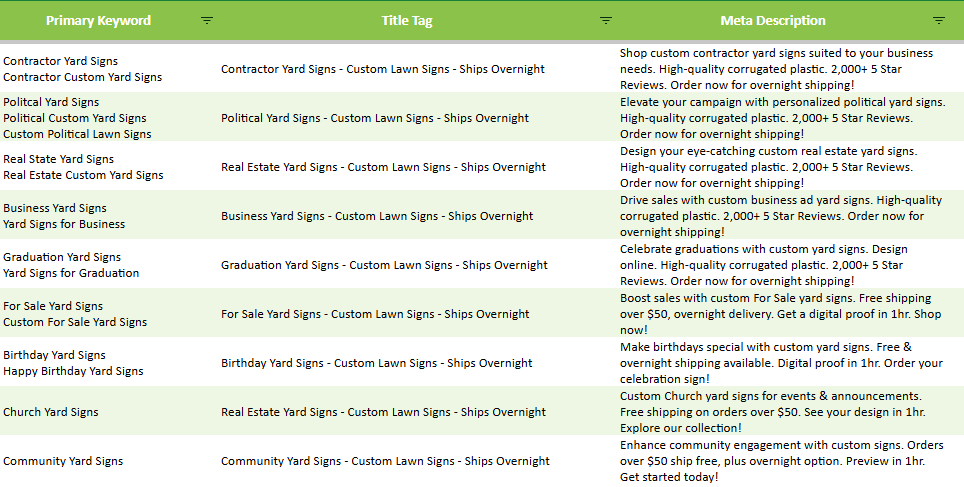
We optimized the title tags, meta descriptions, and header tags to ensure they included our target keywords. We also made the meta descriptions as compelling as possible to increase click-through rates, resulting in additional search traffic.
Content Optimization
Our next step was to optimize the content on the most important pages. Search engines rely on content to better understand the focus and context of the page. Having both the primary target keywords, and related keywords can have a positive impact on rankings.
We used Surfer SEO to uncover which keywords the top ranking websites were using in their content. We then optimized the content by incorporating many of the related keyword
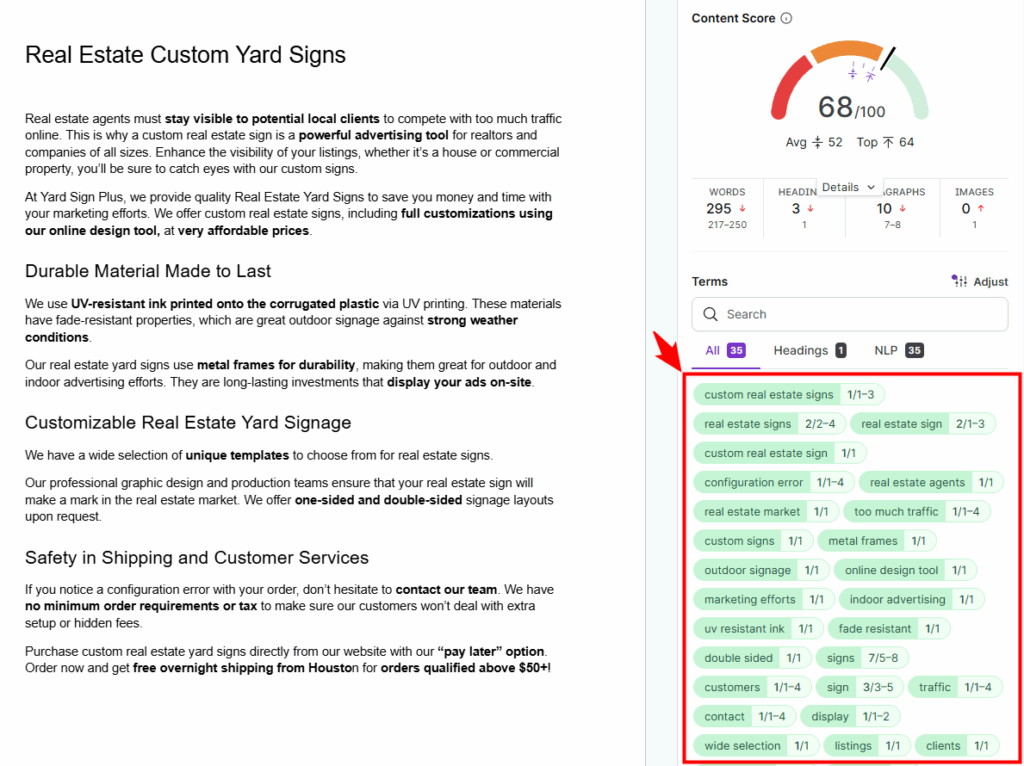
But many important pages didn’t have any content to begin with. That leads us to the next step of the SEO process: content.
Content
The next stage of the SEO process was to add some helpful content to the website that actually provides value to readers. Our initial SEO audit uncovered a few content issues for Yard Sign Plus.
- Category pages didn’t have enough content
- There was a lack of relevant blog posts
Category Page Content
A few category pages had lots of great content, some had just a few sentences, and most other category pages didn’t have any content. So in addition to optimizing any existing category descriptions that were already in place, we also spent some time creating new optimized category descriptions.
We made sure the most important category pages had at least 200 – 300 words of unique content. When creating category descriptions, we focused on providing helpful information to potential customers by answering the following question:
- What are the benefits of this product?
- Who are these products for?
- What materials are available?
- What customization options are included?
- What sizes are available for the product range?
- How does shipping and returns work?
This ensures we can provide a positive user experience through helpful information, while also having enough content to rank well in search engines.
Blog Posts
There were 2 main goals with the blogging efforts.
- We wanted to drive additional search traffic while educating potential customers.
- We wanted Google to see Yard Sign Plus as the “Topical Authority” on all things related to yard signage for businesses and organizations.
As such, we created a content calendar and produced several blog posts each month. Each blog post was targeting a specific high volume keyword to ensure the most search traffic possible.
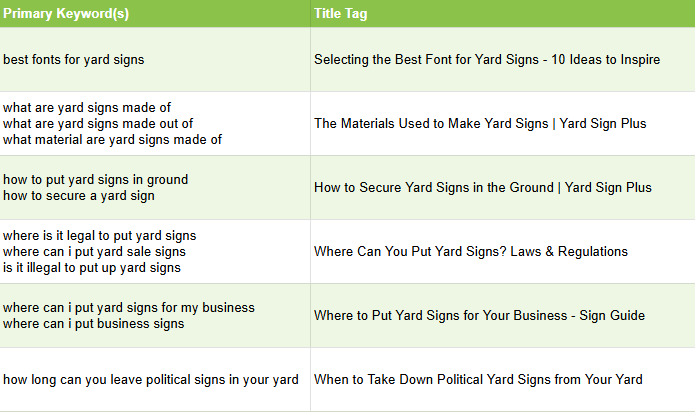
With the topics identified, the next step was to actually start creating the blog posts. We made sure to include relevant images, graphics, facts, stats, and references to make the content as helpful as possible.
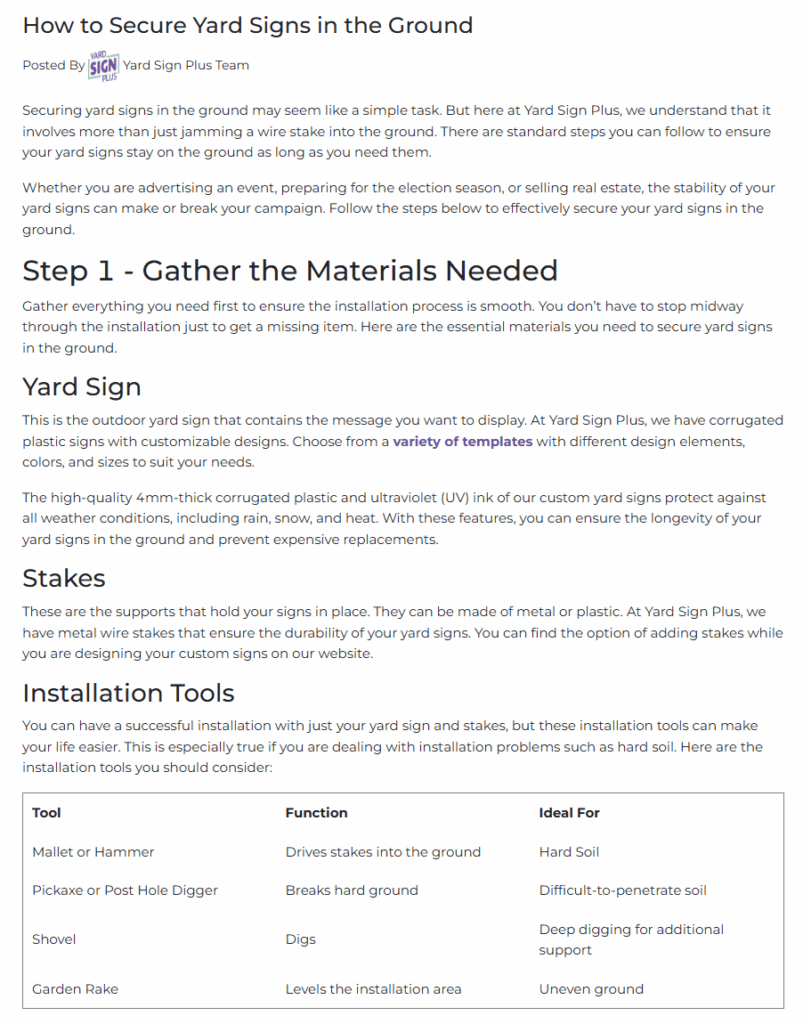
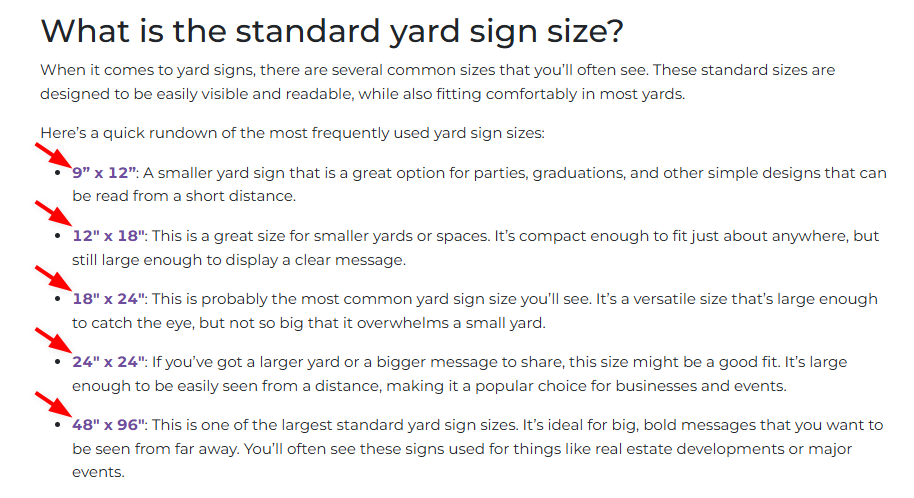
We also added internal links to the most important category and product pages within the content. Internal links can help improve rankings of the destination page, assuming the source page, destination page, and anchor text are all relevant.
Link Building
For the last step of the process, we focused heavily on acquiring high-quality backlinks to improve the website’s authority, and further improve the SEO performance.
Website Prospecting
The first step was to prepare a list of potential prospects that would be good candidates for link outreach. Using our proprietary prospect analysis tool, we quickly assessed potential websites that passed our prospecting criteria.
- Domain Rating of at least 20
- At least 500 visits per month
- No significant traffic drops year-over-year
- Majority of traffic coming from US or other English speaking countries
- No external links to questionable niches (casino, betting, pharma, porn, dating, cannabis, crypto, etc.)
Once we had identified 100’s of qualified link prospects, the next step was to reach out for backlinks. Here’s an overview of the main link building strategies we used.
Competitor Link Building
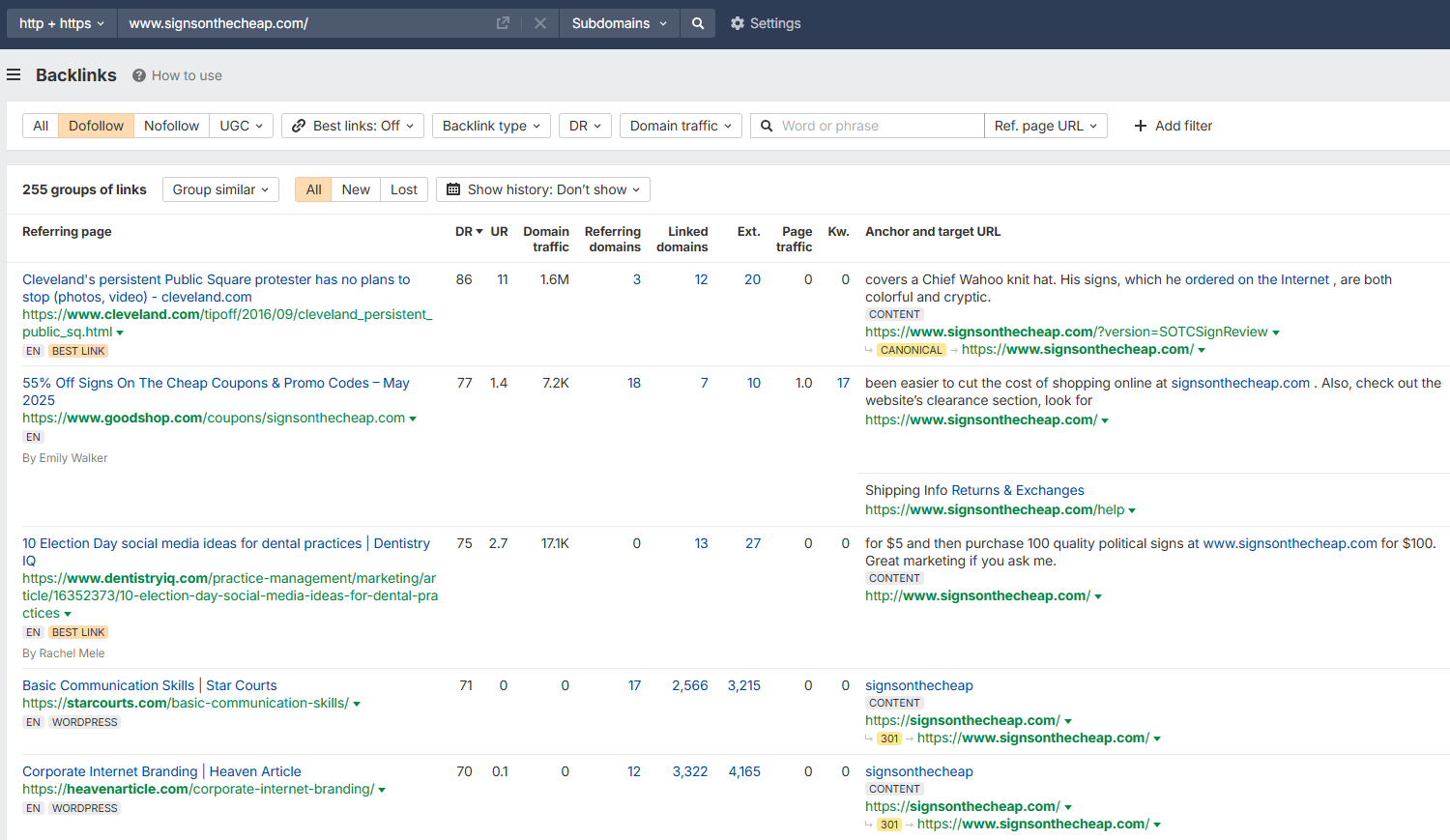
We identified even more backlink opportunities by reviewing the backlinks of the leading competitors using Ahrefs.
We then reached out to any relevant websites with a compelling link pitch, incentivizing them to link to us as well.
Guest Posting
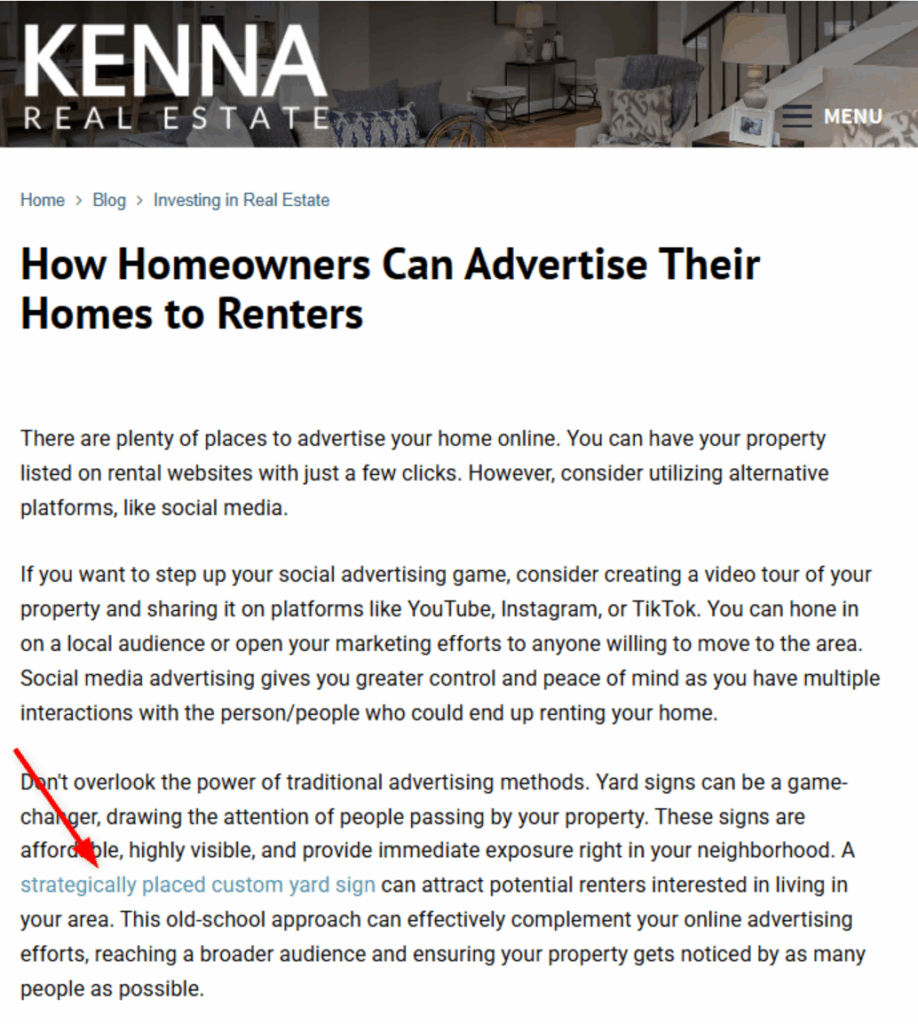
Guest posting is one of the most common link building strategies, usually because it’s very consistent. Basically help out a blogger by writing a high-quality article for their website, and they’ll usually let you include a link back to your website.
What’s great about guest posting is that since we’re writing the article, we have more control over the destination page the link points to. This makes it easier to get backlinks directly to the pages that need them the most (category pages and product pages).
The popularity of this strategy has led to guest posting being abused and the effectiveness of guest posts being brought into question.
However we’ve seen firsthand how powerful guest posts can be when the following guidelines are followed:
- The website must be relevant and on topic
- The website must enforce editorial standards.
- The website also writes their own content and isn’t just a guest post farm (sites with a “write for us” or “contribute to” page are usually guest post farms).
- The guest post content is 100% unique.
And that’s exactly what we did for Yard Sign Plus. We worked with a wide range of real estate, business, event planning, and other relevant bloggers to secure guest posts just like this.
Link Building Summary
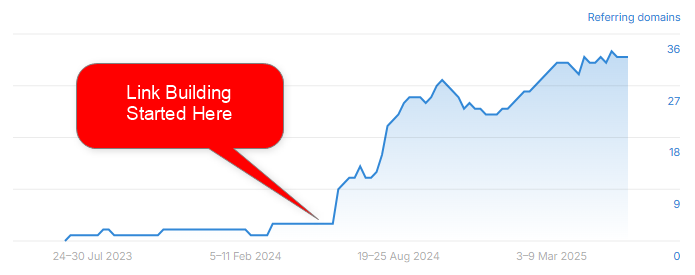
During the 7 month SEO project, the team was able to successfully acquire 40 high quality backlinks.
SEO Campaign Results
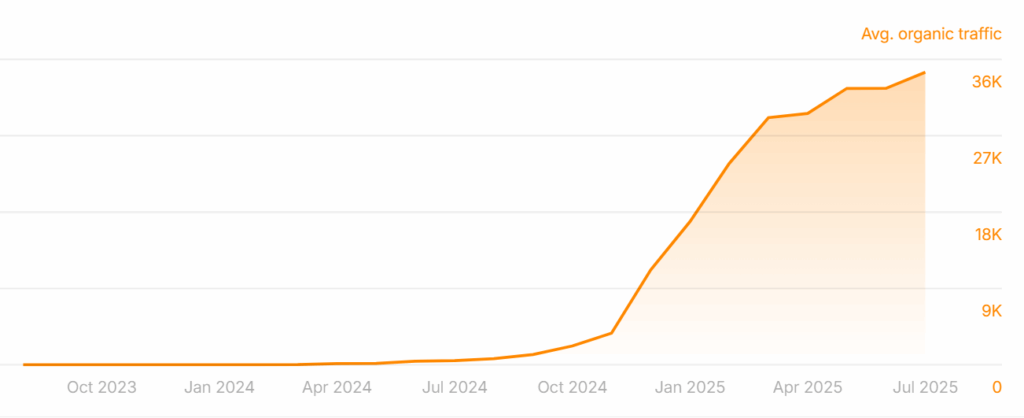
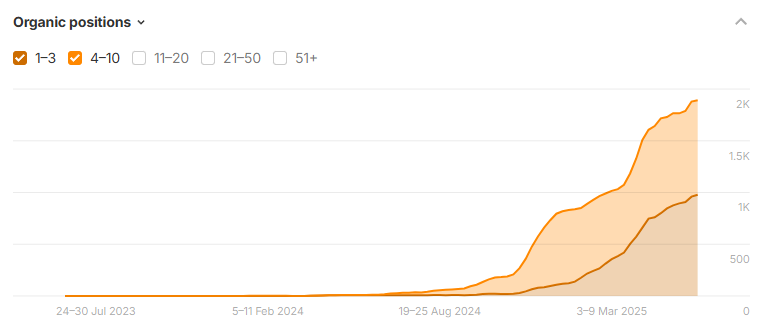
Yard Sign Plus went from around around 10-15 visits per month to well over 30,000 visits per month in just 7 months.
During the same time, the number of keywords on page 1 grew from just 0 to now having 1,891 keywords ranking on page 1.
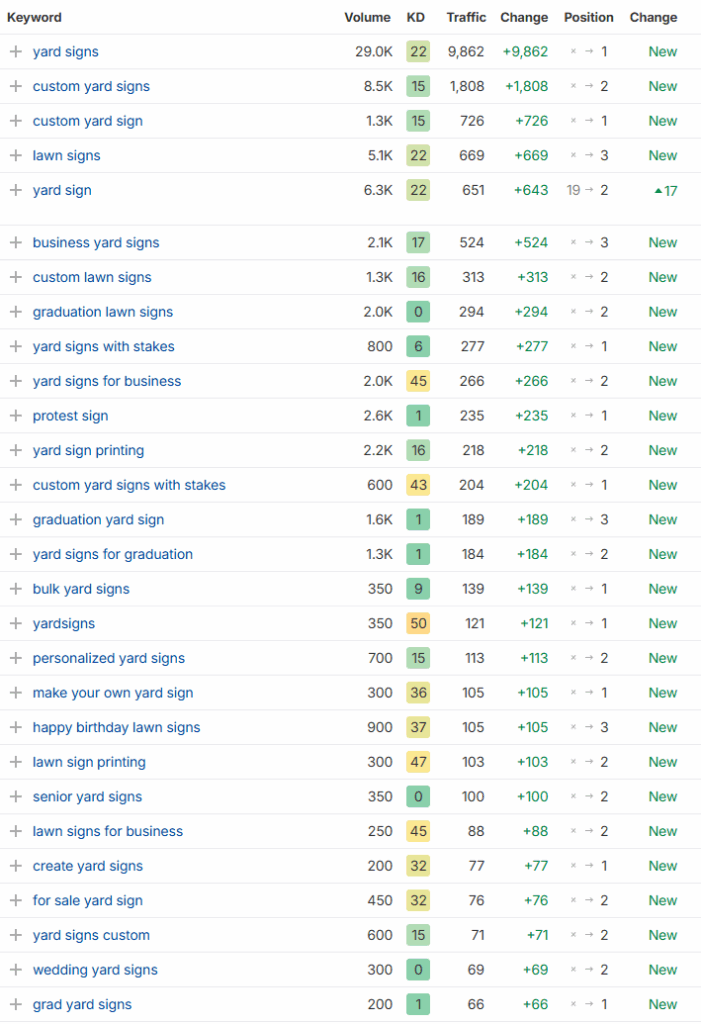
And here’s how their most important keywords were impacted by all the SEO efforts.
Key Takeaways
- Fixing technical issues can positively impact keyword rankings and site performance.
- Make it crystal clear to search engines which page you want to rank for each keyword.
- Understand the type of pages search engines predominantly rank on page 1 for your keywords.
- Optimizing the meta data and content on your top pages is still very important.
- Make sure you’re building relevant backlinks from trusted domains.
- Create educational content on relevant topics that your customers are actually searching for.